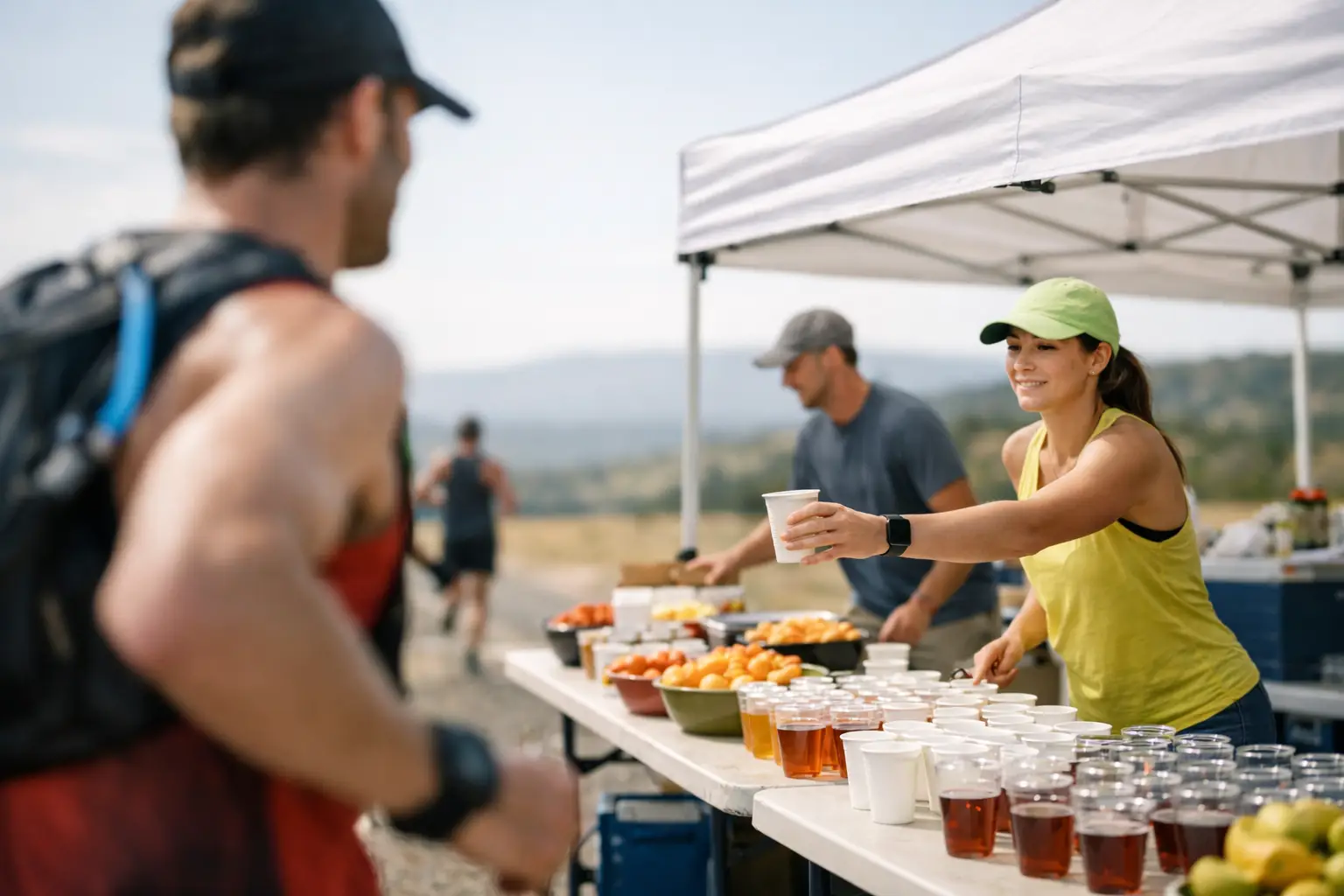
You do not blow up at mile 42 because of mile 42. More often, you blow up because your aid station pacing strategy was built on average pace, wishful thinking, or road-running logic that never matched the course. In trail racing, the real unit of the day is not the mile. It is the segment between aid stations.
That shift matters because aid stations are where pace, fueling, gear, crew support, and cutoff pressure all collide. If your plan says 12-minute miles but the next segment includes a steep hike, a technical descent, creek crossings, and exposed heat, that number is useless. A better plan starts with the stations, then works backward through terrain and forward through fatigue.
Why aid station pacing strategy works better than mile splits
Trail races are uneven by nature. One five-mile segment can run fast on smooth singletrack. The next five can take twice as long because of grade, footing, altitude, or weather exposure. A flat average pace across the full race hides those differences and usually pushes runners into bad decisions early.
An aid-station-based model is more realistic because it matches how the race actually unfolds. You are not just asking, how fast am I running right now? You are asking, how long should this specific section take, how much do I need to eat and drink before the next stop, and how much buffer do I need before the next cutoff?
That is how experienced ultra runners think on race day. They manage one segment at a time. They know where the long climbs are, where they can run, where they should hike, and where aid station time needs to stay tight.
Build your aid station pacing strategy by segment
Start with the course map and every official aid station. Then look at each section as its own problem. Distance matters, but it is only part of the picture. Elevation gain and loss, trail surface, expected weather, and time of day often matter more.
1. Estimate segment time, not just pace
For each aid station to aid station leg, assign an expected time. Do not rely on one race-wide pace target. A six-mile climb to a high ridge may take 90 minutes or more. A six-mile descent on runnable trail may take 55. Those are different efforts, different fueling demands, and different opportunities for time gain or loss.
Use your own training data where possible. If you know how you move on steep grades, technical descents, or late-race rolling terrain, use that. If you do not, be conservative. Most runners overestimate their runnable pace and underestimate how much technical terrain slows them down.
2. Match effort to terrain
The goal is not to run every segment at the same speed. The goal is to keep output controlled enough that you are still moving well after the halfway point. On long climbs, that usually means hiking early rather than forcing a run that spikes heart rate and burns matches. On smooth descents, it may mean opening up a bit. On technical downhills, restraint often saves more time than aggression because it protects quads and reduces mistakes.
Your pacing strategy should reflect how the terrain wants to be raced, not how your ego wants to race it.
3. Add realistic aid station time
Aid stations are part of the segment plan, not dead space outside it. If you always lose four minutes at every major station but budgeted one, your pacing chart is fiction.
Short stops might take 60 to 90 seconds if you are self-sufficient and moving cleanly. Bigger stations with bottle swaps, food decisions, bathroom stops, or gear changes can take three to six minutes fast. Longer if you are sloppy. Build that in before race day. The easiest time you will ever save in an ultra is wasted time standing still.
Use cutoffs the right way
Cutoffs are not just pass-fail markers. They are pacing checkpoints. A strong aid station pacing strategy tracks your projected arrival against each cutoff and maintains a usable buffer.
That buffer should not be the same everywhere. Early in the race, you want margin without overspending. Later, especially before night sections or big climbs, more buffer matters because delays compound when you are tired. If a segment is exposed, remote, or technically slow, arriving at the previous station with only a few minutes to spare is a bad setup.
The key is to avoid two common mistakes. The first is starting too hard to bank time. The second is drifting through early aid stations because the cutoff feels far away. Both lead to pressure later. A smart plan creates steady, defendable margin without turning the first third of the race into a fitness test.
Fueling and pacing are the same system
A pacing plan that ignores fueling is incomplete. Every aid station segment should tell you not only how long the leg should take, but what you need to carry to get through it.
If the next section is expected to take 70 minutes in cool conditions, your bottle volume and calorie plan will look different than a two-hour exposed climb in afternoon heat. This is where runners get trapped. They pace one segment as if it is short, carry light, miss calories, and then fade so badly that the next two segments unravel.
Think in terms of segment demand. How long is the leg? How hot will it be? How much climbing is packed into it? Is the next station full-service or minimal? Are you likely to arrive there moving well, or already on the edge? Your answers shape both your pace and your intake.
This is also why aid station location matters more than generic mile markers. A race can look simple on paper but become complicated fast if aid is sparse between major climbs or if the longest segment lands late in the day.
Where runners usually get the plan wrong
The biggest error is building the schedule from total finish time backward without respecting the course. That can work on the road. It fails fast in the mountains.
Another common mistake is treating aid stations as reset buttons. They are not. If you arrive cooked, dehydrated, behind on calories, and mentally flat, you may improve a little after a stop, but the damage carries forward. The real work happens in the segment before the station.
Then there is the pacing fantasy built around best-case conditions. Dry trail, cool air, zero stomach issues, perfect transitions, endless runnable legs. Real races are messier. Good plans include friction. A little delay at one station. A slower technical descent. Heat in the afternoon. Reduced pace after dark. If your plan only works when everything goes right, it is not a race plan.
How to adjust on race day without losing the plot
No pacing sheet survives the whole day untouched. The point is not to force every split. The point is to know what changed and whether it matters.
If you are five minutes down after a technical descent but feel controlled, that may not be a problem. If you are five minutes down because you surged the climb, skipped calories, and staggered into the station overheated, that is a problem. Same split. Different meaning.
Use each aid station as a decision point. Ask three things. Did this segment take the expected time? Did I fuel and hydrate to plan? Am I leaving this station in a condition that supports the next segment? That keeps your focus where it should be - on process, not panic.
Sometimes the right move is to let the pace chart go and race the people around you. Sometimes the right move is to protect the day and stay disciplined because the hard miles are still ahead. It depends on the course, your goals, and how much damage you have already taken. But those decisions get easier when your plan is built around real segments instead of vague averages.
Make your plan specific enough to use under stress
A useful pacing plan fits on one page or one watch screen in your head. Aid station name. Segment distance. Estimated time. Cutoff. Calories and fluids needed. Any notes that matter, like long exposed climb, technical descent, crew access, or headlamp pickup.
That level of detail makes the race smaller. You stop thinking about the full distance and start solving what is directly in front of you. For serious trail runners, that is one of the biggest advantages of course intelligence. You reduce uncertainty before race day, so you are not improvising when your heart rate is up and the trail turns ugly.
This is exactly why platforms like TrailSight organize race prep around terrain, aid stations, and real course flow instead of generic split charts. The more specific the segment picture, the better your pacing decisions hold up when conditions get honest.
A strong aid station pacing strategy does not promise a perfect race. It gives you a plan that still makes sense when the course starts taking pieces off the field. That is the kind of plan worth carrying into the mountains.
Know your next station. Know what it will take to get there. Then run that segment like it matters, because it does.